Related

Best Strength Training For Ladies Over 30
Yoga, Barre, Pilates, Barbells? What "Strength Training" Really Means For Ladies After 30
A young lady came into the gym the other day who has taught yoga full-time for years and is currently an instructor of instructors. She said something that got me thinking: she feels like she's missing true strength in her body, and that her routine needs weight-lifting alongside her yoga practice to actually build muscle mass, create toning and definition she can see, and support long-term health. She doesn’t know where to start and wants to be intentional with strength training. That’s why she came to FRVR FIT.
Ask a room full of women in their 30s what they do for strength training, and you'll hear some version of the same three answers: "I do yoga." "I do barre." "I've been meaning to try Pilates."
All three are wonderful practices.
None of them will build the kind of strength your body actually needs to stay lean, resilient, and capable for the next 10, 20, 30 years.
“Hard” doesn’t mean “strength”. I’ve done a few yoga classes here and there and it’s by no means easy! Sure, it can build some strength and stability, but ladies often tell me “I want to look like I workout!” Yoga, Barre, Pilates isn’t going to add muscle mass, which is what’s necessary to look like you workout.
That's not a knock on any of these practices, It's just a clarification worth making. The words we use shape the results we get and "strength training" has quietly become a catch-all term for anything that isn't sitting on the couch or running a half marathon. Let's separate the two, look honestly at what each method offers, and talk about the one method that actually builds real physical strength and the muscle mass to show for it: lifting weights.
Yoga: Breath, Mobility, and a Calmer Nervous System
Yoga is one of the best tools available for mobility, breath control, and stress regulation. It teaches body awareness most people never develop otherwise, and the mental benefits are well documented: lower cortisol, better sleep, a more regulated nervous system. If your week is full of back-to-back patients, parent conferences, or client calls, a yoga practice can be the thing that keeps you from running on empty.
It’s a great mental and physical reset without the added stress of a big session in the gym.
What it isn't built to do is progressively overload your muscles. Yoga uses bodyweight in fairly fixed ways, and once your body adapts to a pose, there's no built-in mechanism to keep demanding more from your muscles the way they need in order to grow stronger. That's not a flaw in yoga, it was never designed to be a strength-building protocol. It's designed to be what it is, and it's excellent at that.
Barre: Endurance, Posture, and Small-Muscle Control
Barre classes are great for muscular endurance and postural awareness. The tiny pulsing movements and isometric holds build real burn and good control, especially through the hips, glutes, and core. Many women love barre because it feels precise and controlled, and it genuinely improves how you carry yourself day to day.
The limitation is intensity of load. Barre relies on very light resistance, often just your own bodyweight or a couple of pounds held for a long time. That builds endurance in the muscle fibers you're using, but it doesn't create the mechanical tension needed to build meaningful muscle mass or bone density. Your muscles adapt quickly to a stimulus that stays the same, and most barre routines don't have a clear path to increasing that stimulus over time.
Pilates: Core Stability and Controlled Movement
Pilates is often the first thing women search for when they decide they want to "get toned" or "build core strength," and it's easy to see why. The focus on control, alignment, and deep core engagement is genuinely valuable.
But like barre, Pilates typically works with very light resistance: springs, bands, or bodyweight, and the focus is control, not overload. You can get remarkably strong at holding a plank with perfect form. That's a different skill than getting stronger and confident with moving loads in a variety of everyday positions.
So What Really Is Strength Training?
Muscle only grows stronger and more resilient in response to one thing: a demand it has to adapt to, that keeps increasing over time. In exercise science, this is called progressive overload. Yoga, barre, and Pilates can all provide some version of resistance, but none of them have a built-in system for continuously increasing that resistance in a measurable, trackable way.
Strength Training is also relative. To someone just starting out, air-squats, light dumbbells, and ring-rows might be an “overload” for them and therefore it’s strength training. After a while though they will need more resistance to continue building.
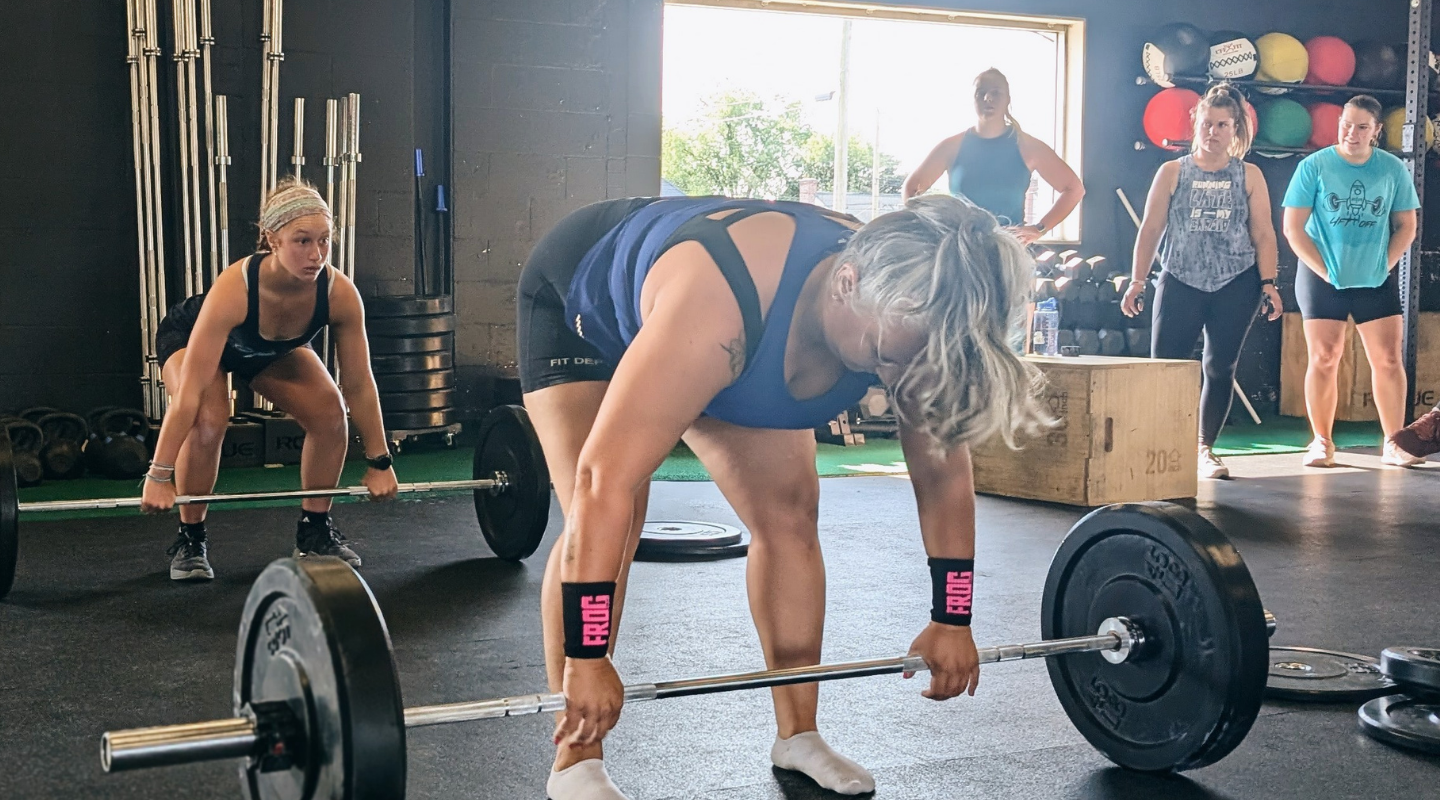
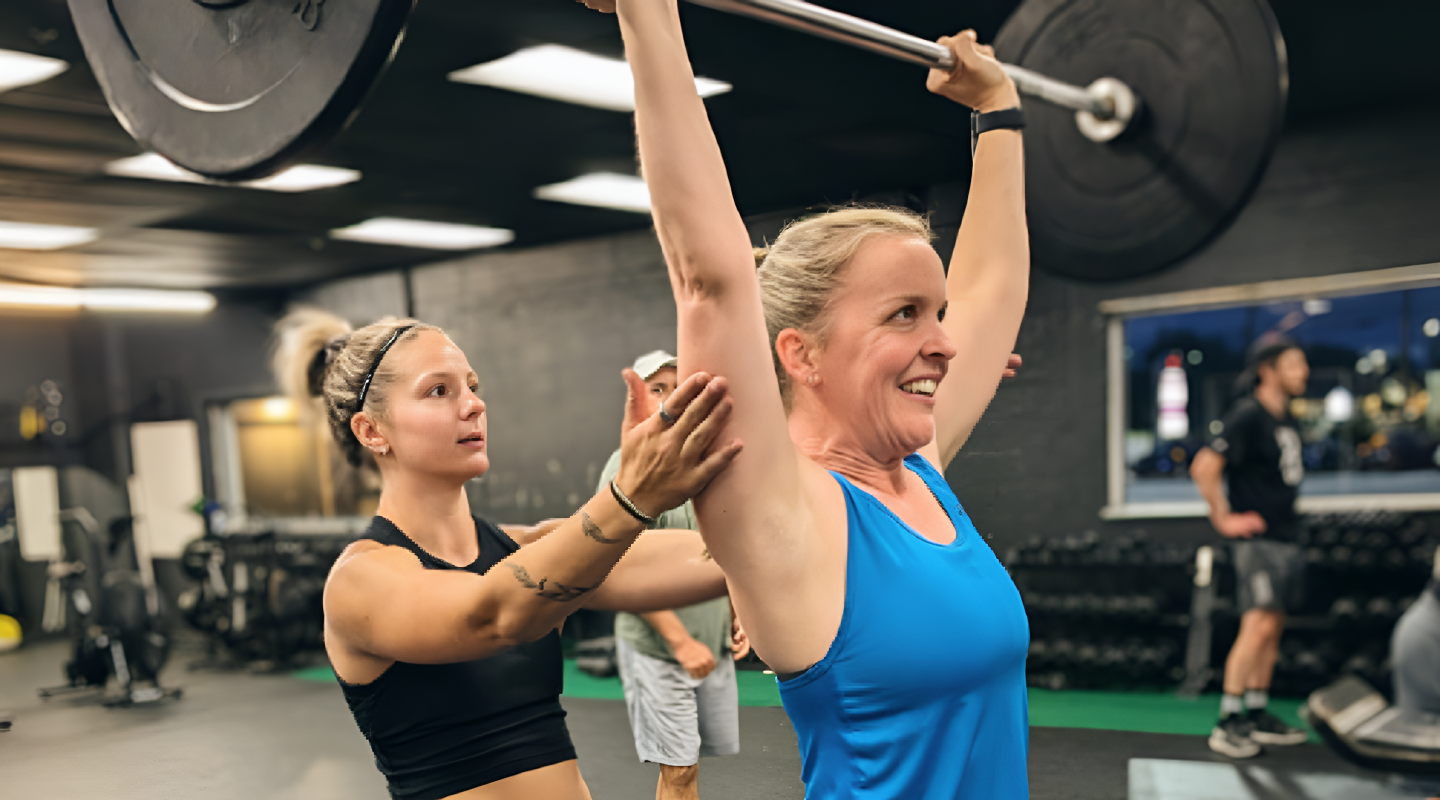
When you pick up a barbell, you know exactly how much weight you're lifting today, and you have a clear, simple path to lift a little more next week, and a little more the week after that. That's the entire mechanism behind building muscle mass, strengthening bone density, and developing the kind of full-body strength that shows up as visible definition in your arms, middle, and back, the thing so many women tell me they're chasing without realizing weight-lifting is the most direct road there.
Let's Dispel a Few Myths, Calmly
“I’ll be sore all the time.” This is a fair assumption. You’ve probably talked to a friend recently who couldn’t hardly climb the stairs after leg-day. Or getting in and out of the car takes a full 2 minutes. I’ve been there. Soreness is the result of lactic acid build up in our muscles which can take several days to dissipate after a high-volume day. High-volume being the key term here. Soreness from lactic acid is actually a volume thing, not a lifting weights thing.
"I'll get bulky." Building significant muscle mass requires a specific combination of heavy, progressive training, a large caloric surplus, and for most women, hormonal conditions your body simply doesn't have in the same way men's bodies do. What you'll build instead is lean, defined muscle, which is exactly the "toned" look most women are describing when they say that word. Most women that come to FRVR FIT for coaching have a muscle-mass-to-body-weight ratio of 30-35%. To have muscle definition and to look “toned”, you need a muscle-mass-to-body-weight ratio of 45% or higher.
"It's dangerous, especially once I'm past 50." The opposite is actually closer to the truth. It’s dangerous to NOT lift weights after 50! Bone density and muscle mass both decline with age, starting in the 30s, and weight-bearing resistance training is one of the few interventions proven to slow and reverse that decline. Done with good form and sensible progression, lifting is one of the safest, most protective things you can do for your joints and skeleton as you age. The real danger is the years of muscle and bone loss that come from avoiding resistance training altogether.
"It's complicated and I don't know where to start." Every method feels complicated before someone shows you the fundamentals. A handful of core movements like squat, deadlift, press, row, covers the vast majority of what your body needs, and they scale with you from your very first session to years down the road. You don't need to master ten machines or memorize a spreadsheet. You need someone to teach you the basics, load them appropriately, and help you add a little more weight over time.
"I don't have hours to spend on it." You don't need hours. Two to three focused sessions a week, built around a small number of compound lifts, is enough to build and maintain real strength for the long haul. This isn't about grinding away, it's about intentional consistency with the right approach.
Here's the part that matters most, and it's the part that's easy to lose sight of in your 30s.
The goal isn't just how your arms look this year. It's whether you can still carry your own groceries, get up off the floor without thinking about it, and keep your bones strong at 60, 70, and 80. Cardio-based classes and mobility work have value, but they don't build the muscle and bone density that make those decades easier. Weight-lifting does.
Yoga, barre, and Pilates all deserve a place in a well-rounded routine, but if the goal is strength, the kind that shows up as visible muscle definition now and as resilience 20 or 30 years from now, barbell training is the method built to get you there, and it's far more approachable than most women expect.
If you've been circling strength training for a while, wondering where to start, that's exactly what we help you with. No guesswork, no intimidation, just a clear, sustainable path to real strength, at whatever pace fits your life.
At FRVR FIT, we make strength-training attainable for all no matter their starting point. You will learn awareness and control, how to stabilize your joint systems, how to improve flexibility, and how to increase load intentionally to build a body you're proud of.